1. Accountant tasks #
Payables Management Accountant Tasks are mainly these:
- Supplier Invoice Entry.
When a certain material or other stock is ordered, a supplier issues an invoice that needs to be recorded in the company’s accounting. Thise means the invoice amount gets posted to the relevant accounts. This task may be shared with a colleague from the procurement department.
- Posting Correction.
If an invoice was entered incorrectly, it has to be corrected.
- Preparation of Payments.
The accountant prepares the payment run according to the payment terms and payment methods that were settled with the supplier.
- Down Payments.
A supplier may request a down payment before the order gets delivered. The accountant issues the down payment, complying with the negotiated terms.
- Payment Run.
This activity generates a payment object (such as a check or a bank transfer) depending on the payment method.
- Periodic Activities.
Financial closing requires certain periodic activities, such as sending out account balance confirmations to the suppliers, performing foreign currency valuations to the invoices posted in foreign currency and regrouping payable items within the balance sheet.
2. Functions #
Payables management functions can be divided in:
- Account Managment.
Maintain supplier master data.
- Payment processing.
The aim is making payments at the best time using the payment program.
- Correspondence.
The aim is the communication with the supplier, such as sending the balance confirmation or account statements.
- Supplier Analytics.
The aim is getting key information such as “payable outstanding”, “overdue payables”, or “aging analysis”.
3. Related apps / transactions #
Display Supplier Balances app #
You can view the balances for any supplier in a company code and fiscal year, and compare it with other years. The information is presented with a row per period. The balance is the sum of postings of each period. You can navigate to the “Manage Supplier Line Items” to see the individual postings included in that row/period.
Accounts Payable Overview app #
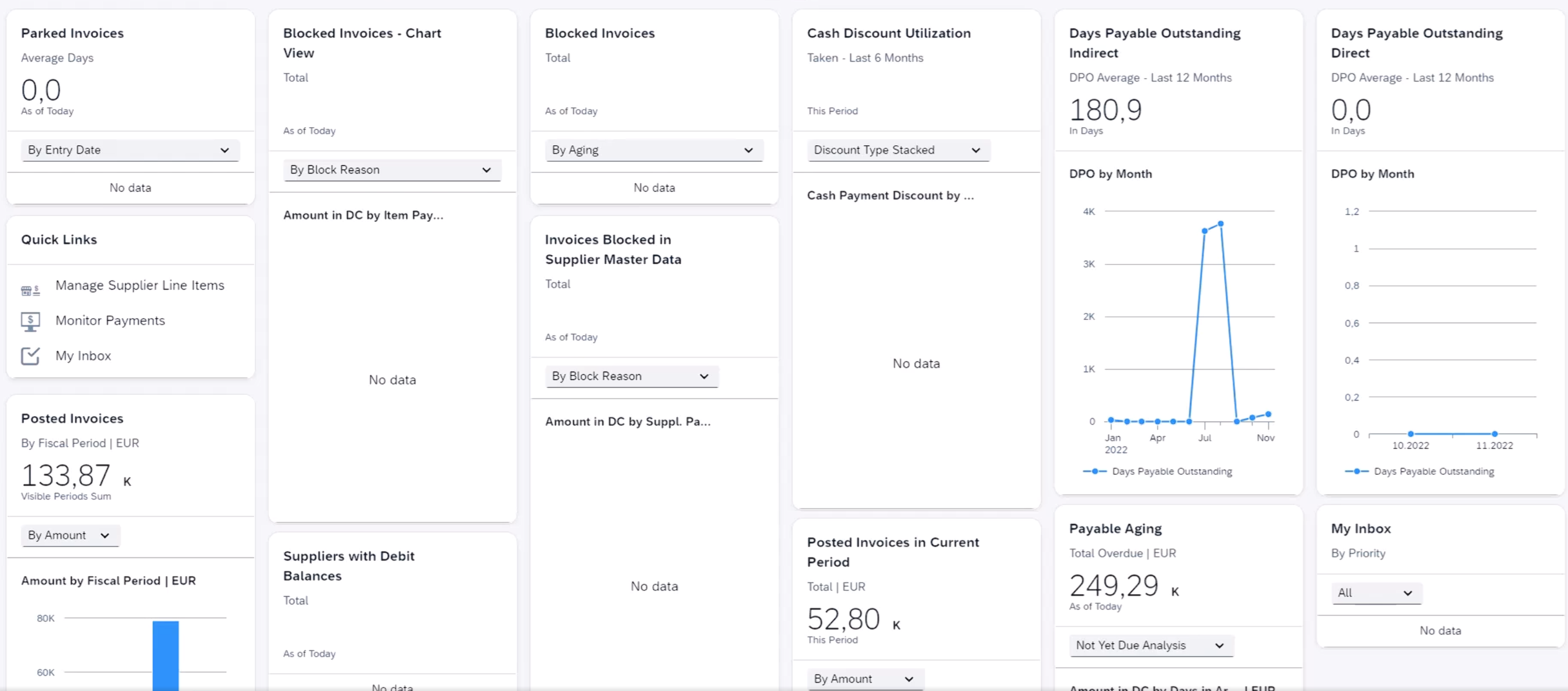
This app is a central entry point to get a big picture overview for the payables management accountant/manager. Here you can monitor important accounts payable indicators and access further accounts payable analytical apps.
 #
#
Days Payable Outstanding app (DPO) #
The representation of an average number of days your company takes to pay its invoices to the suppliers. There are two methods that often show slightly different DPO numbers for the same period, whitch is expected, since it’s a feature of the different methodologies, not a data quality issue.
There are two methods:
- Indirect
It calculates DPO at an aggregate level — meaning it doesn’t look at individual invoices. Instead, it uses rolling monthly averages for your AP balance and your purchases over the last 12 months. You can even configure how many months go into each rolling average separately for payables and purchases. This smooths out spikes and gives you a more stable, trend-oriented view.
Use Indirect when you want a smooth, period-based trend — good for benchmarking, board reporting, or working capital KPI tracking. It’s less sensitive to individual transaction timing quirks.
- Direct
calculates DPO at the document level — it looks at individual accounting documents to work out how long each one took (or is taking) to be paid, then aggregates up. This gives you a more granular, transactional picture. You can drill down to top 10 suppliers by highest/lowest DPO, by company code, by country — because the underlying data is at the supplier/document level.
Use Direct when you want to pinpoint which suppliers or company codes are driving your DPO up or down — good for AP team analysis.
Aging Analysis app #
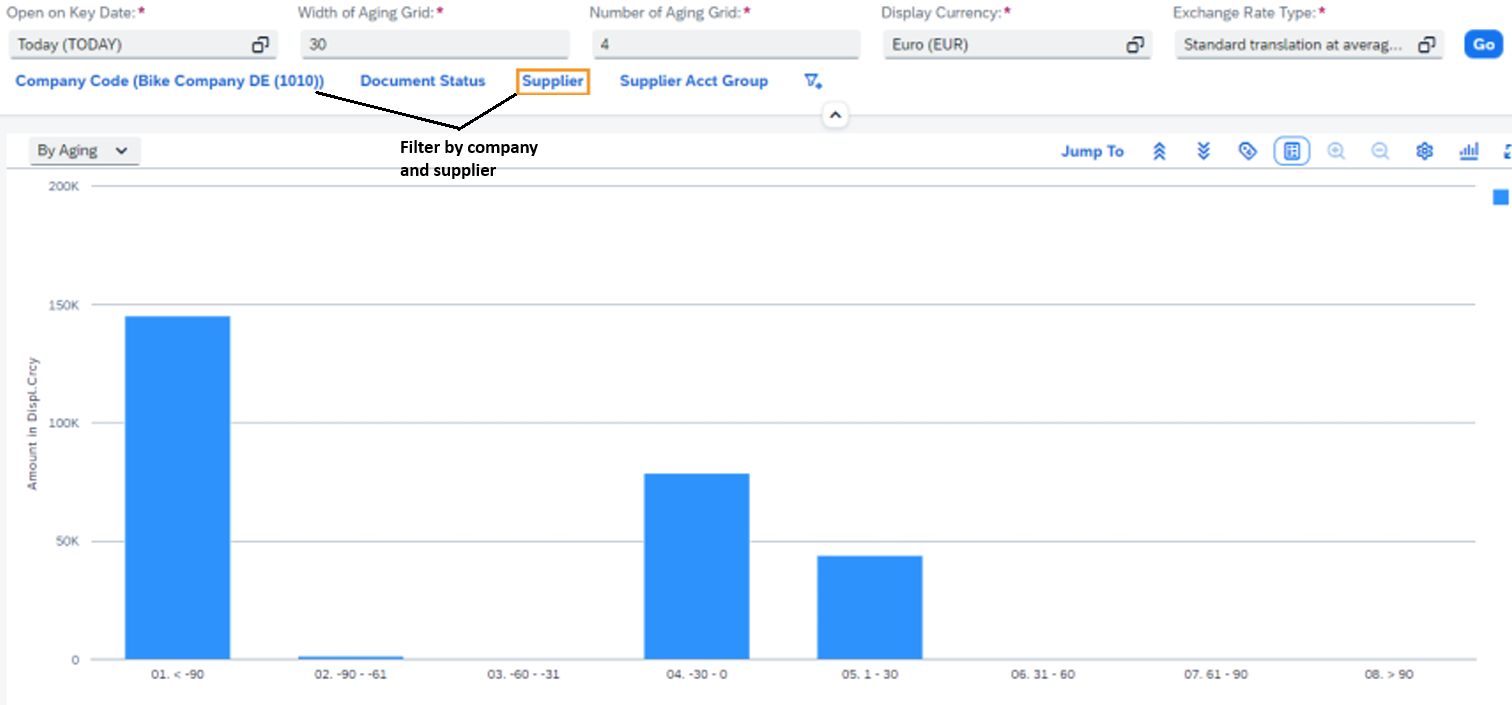
The representation of the outstanding invoice’s lifetime since the posting date. You can check the overdue invoices, or the not yet due invoices.
 Due Invoices free for Payment app #
The representation of your posted invoices released for payment.
Overdue Payables app #
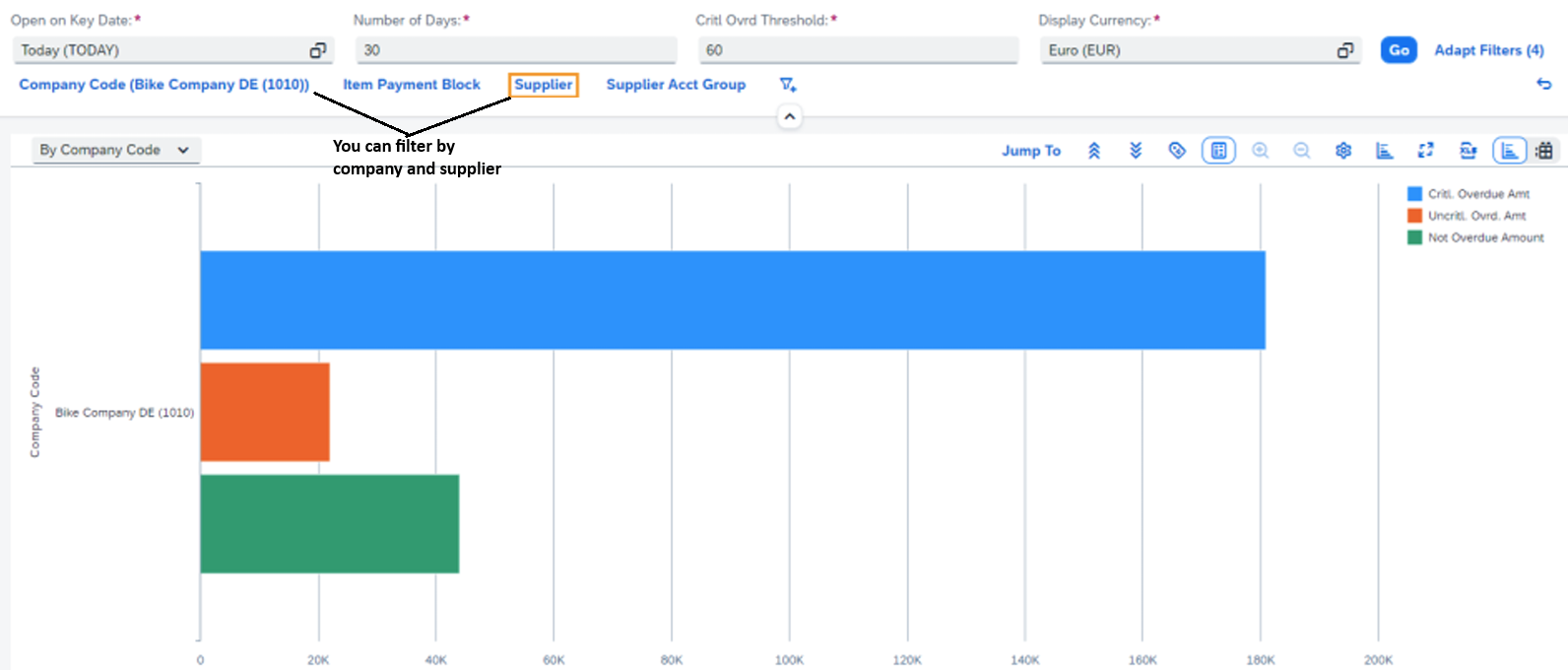
With this app you can monitor the status of the overdue payments to the vendors, and find out potential risks.

 English