An asset is an object, a right or an item intended for long-term use which belongs to a company code.
1. General master data #
General master data contains the most important general information about the asset:
- Asset class.
- Description.
- Time dependent assignment to a CO object: Cost center (mandatory), internal order.
- Posting information, such as the activation date.
- Physical inventory data, such as last inventory date.
- Origin, such as “vendor”.
Additional asset assignments could be to:
- Business Area.
- Segment.
- WBS element.
2. Asset valuation data #
The asset valuation data contains information such as the depreciation keys, useful life in years, depreciation start date (capitalization), or scrap value.
3. Lifecycle status #
Created: When Master data has been created, but capitalization has not occurred yet .
Capitalized: When capitalization occurs (start of depreciation).
4. Examples #
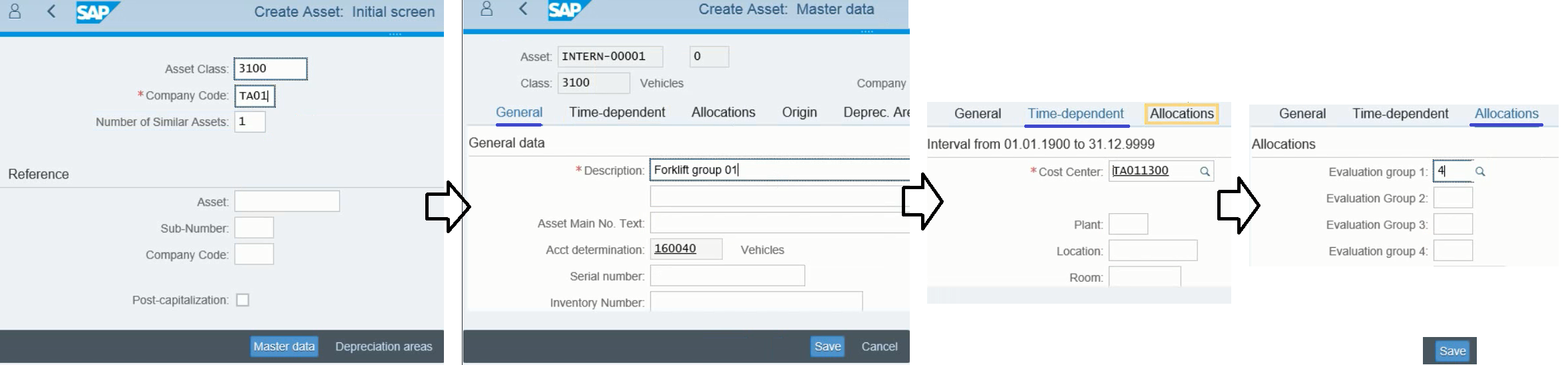
Create assets using an asset class.
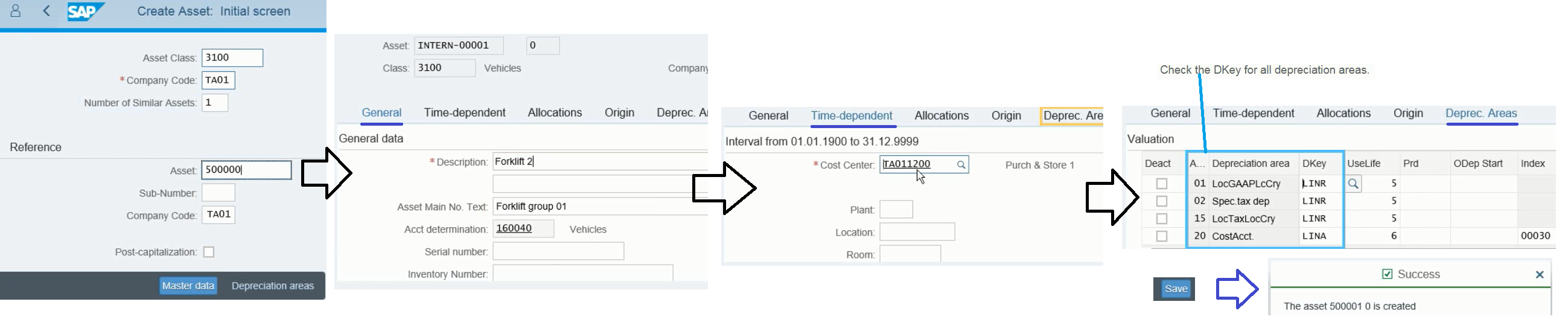
Create assets using a reference:
5. Related transactions and apps #
AS01/AS02/AS03 – Asset Master Data

 English