The asset class is the main criterion for structuring fixed assets in reporting. It ensures that the asset is displayed correctly in the asset history sheet, in the asset list, and in the balance sheet.
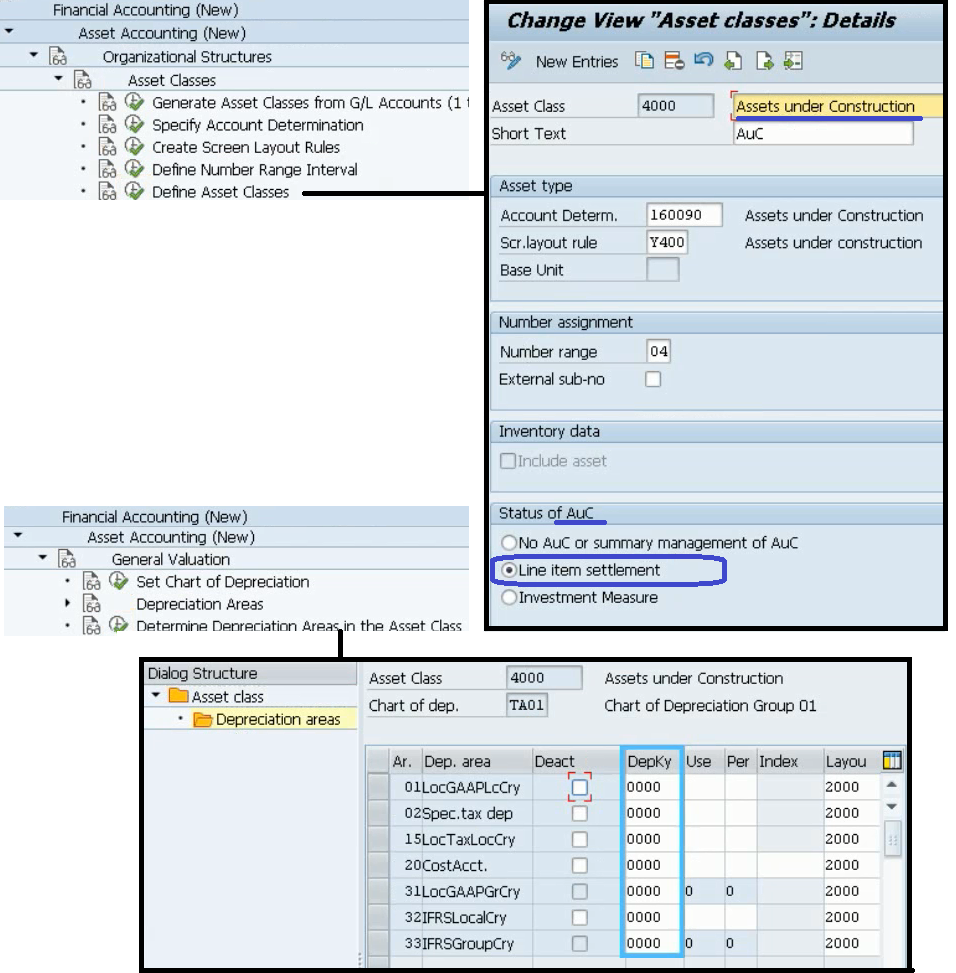
The asset class defines:
- Control parameters (Screen layout rule)
- Default values for depreciation (depreciation keys for depreciation areas).
- Default values for master data.
- Number range of the assets.
- Account determination, to connect to a G/L Account. (Different classes can point to the same G/L account).
1. Appearance in balance sheet #
In the BS, assets with the same asset class appear in the same line item. If assets have to be in different lines, they need to be assigned to different classes with different account determination key.
Classes asset Examples:
- Buildings.
- Machinery & Equipment.
- Fixtures&Fittings (a permanently fixed piece of furniture ).
- Assets under construction.
- Low-value assets.
- Vehicles.
- Intangible assets (patents, software).
- Leased assets.
X. Types (optional) #
Text for types.
X. Further steps #
Text for further steps.
X. Related objects #
Text for related objects.
X. Practical examples #
Text for examples.
X. Related transactions and apps #
Text for related transactions.
trans x
transaction detail
trans x
transaction detail

 English